Commercial Waste Crawley: Recycling and Sustainability in the Borough
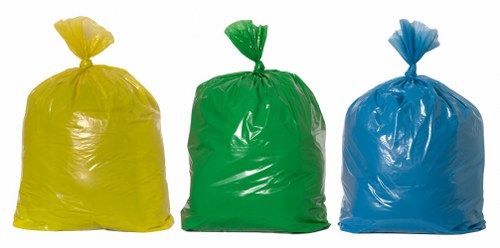
Commercial Waste Crawley is committed to creating an eco-friendly waste disposal area across the borough’s business parks and town centres. Our approach blends practical on-site segregation with wider, borough-level initiatives so that offices, retailers, manufacturers and hospitality operators can benefit from a clear, sustainable rubbish area strategy. We prioritise resource recovery, minimising landfill, and supporting local reuse partners to keep valuable materials in the local economy.
Recycling percentage target and measurable goals
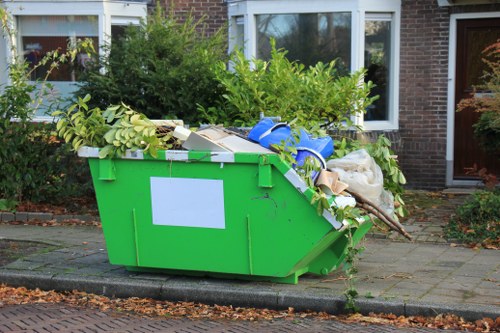
We have set a clear recycling percentage target of 65% recycling for commercial waste by 2030, aligned with regional and national ambitions. This target covers mixed dry recycling, food and organic streams, construction and demolition materials, and specialist waste such as textiles and WEEE (waste electrical and electronic equipment). To reach this goal we combine regular waste audits, clear bin labelling, and monthly performance reports so businesses can monitor progress toward the 65% target and identify opportunities for improvement.
Practical separation: boroughs approach to waste separation
Local boroughs in and around Crawley have adopted pragmatic waste separation schemes that work well for commercial operators. The standard approach encourages source segregation to maximise recycling efficiency and reduce contamination:
- Paper and cardboard – segregated for high-quality recycling streams;
- Glass and cans – collected separately to retain material value;
- Food and organic waste – captured for composting or anaerobic digestion;
- Mixed recyclables – where space or operational constraints require co-mingling, followed by advanced sorting;
- Specialist streams – textiles, wood, plasterboard and WEEE diverted to reuse or recovery partners.
These separation standards help create an sustainable rubbish area at each site and make it easier for transfer stations and processors to accept and treat materials effectively.
Local transfer stations and resource recovery
Transfer stations and resource recovery facilities in West Sussex, including local sites near Crawley, act as hubs that consolidate commercial loads for onward processing. Using nearby transfer stations reduces vehicle miles and emissions by shortening haul distances and enabling bulk consolidation. Typical pathways include direct delivery to materials recycling facilities (MRFs), composting and anaerobic digestion plants for food waste, and specialised facilities for construction materials and WEEE.
Partnerships with charities and reuse organisations
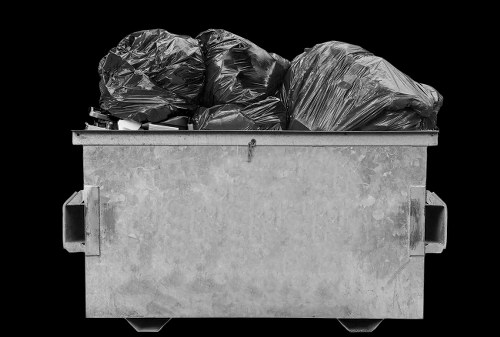
We prioritise reuse through established partnerships with local charities and social enterprises that give business discards a second life. Instead of sending usable furniture, catering equipment, or surplus stock to disposal, we work with local charity networks that accept:
- Office furniture and fixtures for community projects;
- Clothing and textiles sorted for charity retail and recycling;
- Functional electrical items routed through WEEE repair and resale schemes;
- Surplus food directed to redistribution partners where safe and appropriate.
These collaborations reduce waste volumes, support local social causes and contribute directly to the circular economy in Crawley.
Low-carbon vans and fleet decarbonisation
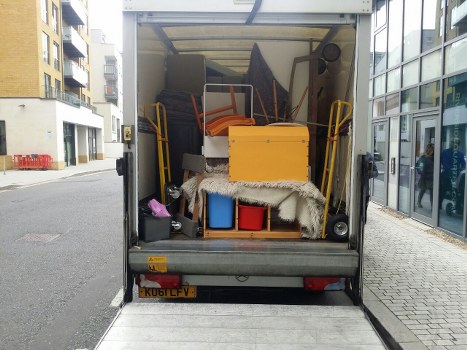
Low-carbon vans are now central to our collection strategy. Our commercial waste fleet includes electric and hybrid vans supplemented by route optimisation software and telematics to cut fuel use. The result is fewer emissions per tonne collected and improved air quality around key trading areas like Manor Royal and the town centre. We also trial cargo bikes and consolidated drop-offs where pedestrianised zones or peak congestion make larger vehicles impractical.
Creating an eco-friendly waste disposal area requires a systems approach: clear site segregation, designated sustainable rubbish areas, and reliable downstream partners. We recommend simple site interventions—well-labelled containers, staff training and scheduled collections—that together deliver measurable reductions in waste to landfill and improved recycling rates.
 Businesses benefit from tailored service models: scheduled dry recycling, dedicated food waste collections, bulky reuse services and segregated construction waste management. Our service model emphasises transparency — charting tonnes diverted, carbon savings from low-emission collection vehicles, and the social value delivered through charity partnerships.
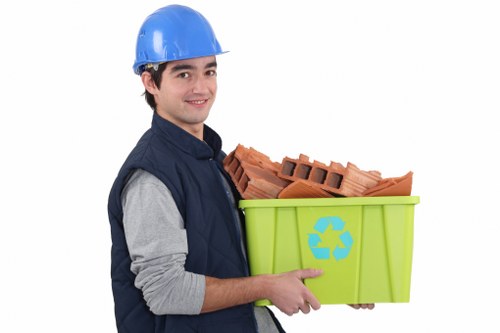
Next steps for Crawley commercial recycling and sustainability
By working together—businesses, borough authorities, transfer stations and charities—we can meet and exceed the 65% commercial recycling percentage target. Embracing separation standards, leveraging local transfer stations, expanding reuse partnerships, and continuing the shift to low-carbon vans will make the borough’s commercial waste system both resilient and genuinely sustainable. Commercial waste in Crawley can therefore become a model of practical, locally-focused recycling and resource recovery that supports economic, environmental and social benefits across the community.
